Vintage Fish, Vintage Card Sea Life: A Dive into Authentic 1856 Artistry
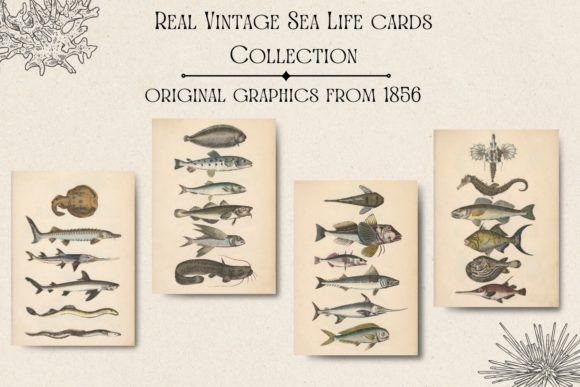
There is a specific kind of visual fatigue that comes from scrolling through endless libraries of digital assets that all look... digital. We recognize the perfect gradients of modern vector work and the uncanny smoothness of 3D renders. While these tools have their place, they often lack the tactile warmth of history. This is where the Vintage Fish, Vintage Card Sea Life collection steps in, not just as a set of graphics, but as a time capsule. Sourced directly from the National Polish Digital Library, these images are not merely "vintage-style"; they are authentic, high-resolution scans of cards dating back to 1856. For the creative professional, this distinction is crucial. You aren't just buying a texture; you are accessing primary source material that offers the imperfections, grain, and chromolithographic charm of the mid-19th century.
What makes these particular graphics stand out in a saturated market of design assets is the subject matter combined with the era's artistic execution. The 1850s were a golden age for detailed illustration, particularly regarding natural history. The depictions of sea life in this collection showcase a level of artisanal craftsmanship that modern software struggles to replicate. You will notice the hand-drawn hatching, the rich but slightly faded color palettes, and the composition styles that were intended for trading cards and educational materials of the time. These aren't just pictures of fish; they are pieces of Victorian and Polish heritage, carefully preserved in the public domain. The personality of these graphics is one of curiosity, elegance, and a sense of discovery—perfect for projects that need to tell a story about nature, history, or exploration.
Strategic Applications for Modern Creators
As a designer or content creator, the true value of an asset lies in its versatility. The Vintage Fish, Vintage Card Sea Life set, provided as high-quality 300 DPI A4 JPGs, is built for professional output. Because these files are scanned at such a high resolution, they function beautifully in both large-format print and detailed digital work. For packaging design, particularly for artisanal goods, sustainable brands, or boutique food products, these images offer immediate shelf appeal. Imagine a craft beer label or a candle box featuring a detailed, 1856 illustration of a pike or a salmon. It instantly communicates a sense of tradition and quality that generic stock photography cannot match.
In the realm of editorial design and publishing, these graphics are invaluable. If you are working on a magazine layout, a book cover, or a blog header focused on marine biology, sustainability, or travel, these illustrations provide a sophisticated visual anchor. They allow you to create a strong visual hierarchy where the imagery speaks to the subject's depth. Furthermore, for scrapbooking and mixed-media artists, these cards serve as perfect focal points. The "card" format is inherent to the design, making them ready-made elements for junk journaling or collage without needing heavy editing to fit a rectangular composition.
Don't overlook the potential for brand identity and logo design inspiration. While you wouldn't typically use a raster image directly as a logo, the style of these vintage cards can inform a brand's entire visual language. A brand looking to evoke a sense of heritage, slow living, or eco-consciousness could use these graphics as textures, backgrounds, or secondary brand marks. They work exceptionally well in social media graphics, where the goal is to stop the scroll. A feed that mixes modern typography with these authentic, textured historical elements creates a dynamic contrast that feels curated and intentional.
Design Mechanics: Pairing and Integration
When integrating Vintage Fish, Vintage Card Sea Life into your projects, the interplay between image and typography is where the magic happens. These graphics have a distinct "voice"—they are detailed, textured, and somewhat formal. Therefore, choosing the right typeface is essential for readability and brand perception. Because the illustrations are intricate, they often pair best with clean, modern typography. A geometric sans serif font can provide a refreshing contrast, allowing the vintage art to stand out without making the design feel cluttered or "old fashioned."
Conversely, if you are leaning into a full heritage aesthetic, a sturdy serif font with high legibility can complement the historical nature of the cards. Avoid overly complex script fonts or handwritten fonts directly over the images, as the competing details can reduce readability and muddy the visual hierarchy. Instead, use these display fonts for headers in negative space, allowing the vintage card imagery to breathe.
From a practical standpoint, remember that these are raster files (JPGs). While they are high resolution, they behave differently than vector files. When resizing, you have flexibility, but extreme enlargements will eventually reveal the paper texture and scan artifacts. In many creative contexts, this is a benefit, adding to the "found object" aesthetic. However, for crisp web design elements, ensure you optimize the file size without losing the characteristic grain that gives the artwork its soul.
Practical Workflow and Licensing
One of the most significant advantages of the Vintage Fish, Vintage Card Sea Life collection is its licensing status. As graphics derived from the public domain, they offer a freedom that many premium font or stock libraries cannot. This is particularly relevant for entrepreneurs and small business owners who need to be mindful of commercial usage rights. You can use these assets in products you sell—whether that’s print-on-demand merchandise, digital planners, or physical packaging—without worrying about royalty tracking or complex attribution requirements (though crediting the National Polish Digital Library is always a classy move).
To get the most out of your purchase, consider your workflow. Since you receive four distinct files, plan how each might serve a different facet of a project. Perhaps one card serves as the hero image for a website banner, while the details of another are cropped and used as repeating patterns or texture overlays in a brochure. By treating these scans not just as pictures but as raw material for creative font and layout experimentation, you elevate your work from simple design to visual storytelling. Whether you are a crafter looking for the perfect ephemera or a marketer building a narrative around nature and history, this collection offers a tangible connection to the past that resonates in the present.