Old Woodlands Vol.1 Collection: A Texture Toolkit for Authentic Design
In a digital landscape saturated with clean vectors and sterile gradients, there is a distinct power in the tangible. The Old Woodlands Vol.1 | Collection offers a bridge between digital creation and the tactile world through its curated set of 12×12 Paper Set of 20 Papers. This is not merely a background pack; it is a comprehensive set of design assets that brings the grit, warmth, and history of nature into your creative projects. For designers, scrapbookers, and content creators looking to inject authenticity into their work, this collection serves as a foundational resource for building atmosphere.
The Visual Character: Grit, Grain, and Narrative
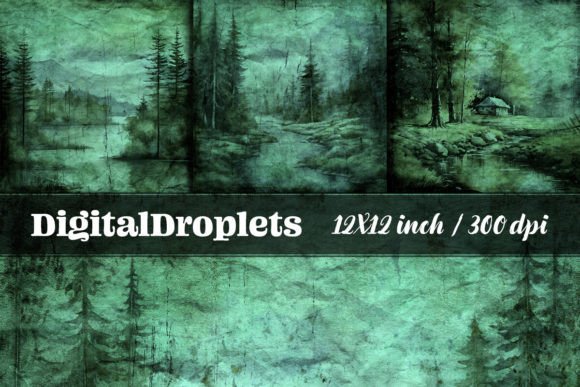
Understanding the aesthetic of the Old Woodlands Vol.1 | Collection is key to utilizing it effectively. The defining characteristic of these papers is the interplay between the organic and the aged. We aren't looking at generic textures; we are dealing with cracked paper textures overlaid on old and scratchy backgrounds. Each of the 20 papers features a unique woodland scape, ranging from dense, shadowy forests to lighter, misty groves.
From a visual hierarchy standpoint, these textures provide immediate depth. The "cracked" overlay acts as a subtle foreground element, while the woodland imagery creates a complex background. This combination eliminates the flatness often associated with digital design. The personality of the collection leans towards the nostalgic and the rustic. It evokes a sense of exploration, vintage storytelling, and timelessness. Whether you are working on a brand identity for an outdoor gear company or a personal junk journal, the visual language speaks of endurance and natural beauty.
Strategic Applications: Beyond Scrapbooking
While the set is explicitly designed for scrapbooks and photo albums, the versatility of the Old Woodlands Vol.1 | Collection extends far into commercial and professional realms. As a creative font enthusiast might pair a serif font with a sans serif font for contrast, a designer should pair these textures with clean, sharp typography to maximize readability.
Print and Editorial Design
In editorial design, texture is often used to set the mood of a feature article. These papers work exceptionally well for magazine covers, chapter dividers, or full-bleed backgrounds for text-heavy layouts. Because they are high-resolution (300dpi), they translate beautifully to print. Consider using them as the backdrop for a vintage-style invitation or as the base layer for packaging design for artisanal goods like coffee, tea, or handmade soaps. The texture does the heavy lifting, allowing you to keep graphic design elements simple.
Digital and Web Presence
In the realm of web design and social media graphics, standing out is about stopping the scroll. The Old Woodlands Vol.1 papers make excellent backgrounds for quote cards, podcast episode covers, or hero images on a lifestyle blog. For blog design, using a subtle crop of these textures behind the header or footer can unify the site’s aesthetic without distracting from the main content. They also function effectively as digital washi tape strips or decorative tags in digital planners.
Brand Identity and Marketing
For entrepreneurs building a brand identity, consistency is crucial. If your brand narrative involves nature, history, craftsmanship, or a "back-to-basics" approach, these assets are invaluable. You can extract color palettes directly from the woodland scapes to ensure your logo design and marketing materials feel cohesive. Use them for background textures in presentation decks, business card designs, or email headers to create a premium font experience where the entire visual ecosystem feels curated and professional.
Technical Specifications and Usability
Practical application relies on technical quality. The Old Woodlands Vol.1 | Collection includes 20 high-resolution JPEG files in a 12×12 format. This square aspect ratio is the industry standard for digital scrapbooking and offers versatility for other layouts—it can be easily cropped to A4, letter size, or vertical social media formats without losing the focal point of the texture.
Because these are raster images (JPEGs), they are best used as background layers. When overlaying text, especially handwritten fonts or script fonts, ensure there is enough contrast. A common mistake in modern typography is placing intricate lettering over a busy texture. To maintain professionalism and readability:
- Use Overlays: Place a semi-transparent white or dark layer over the paper before adding your typeface. This pushes the texture back and brings the text forward.
- Color Coordination: The woods in these images likely have earth tones. Use deep greens, browns, or charcoal greys for your text to blend seamlessly, or stark whites for high contrast.
- Layering: These papers serve as the "canvas." Treat them like physical materials. Layer them with photos, frames, and other elements to create a collage effect that feels three-dimensional.
Elevating Your Creative Workflow
The value of a collection like Old Woodlands Vol.1 lies in its ability to save time while increasing quality. Instead of searching for stock photos and applying complex filter chains to create a vintage look, you have a ready-made foundation. This allows you to focus on the design assets that tell your specific story—whether that is the text, the photography, or the branding elements.
For the hobbyist creating a family album, these papers provide a sophisticated backdrop that honors the photos. For the marketer or small business owner, they provide a way to create social media graphics and print materials that look expensive and thoughtfully curated. The "Old Woodlands" aesthetic is timeless; it doesn't follow fleeting trends, making it a safe and enduring investment for your digital library.
Ultimately, the Old Woodlands Vol.1 | Collection is about grounding your digital work in reality. By incorporating these cracked, scratched, and scenic textures, you invite the viewer to pause and engage with a visual story that feels rich, tactile, and authentic. Check out the variations available to expand your toolkit and discover how these backgrounds can transform your next project from a flat layout into an immersive experience.