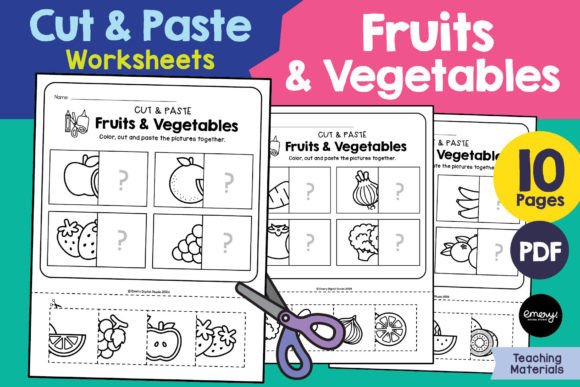
Engaging Visual Design with Cut and Paste - Fruits and Vegetables
Unlocking dynamic and engaging visual storytelling often begins with versatile, hands-on components, and few assets capture this spirit as effectively as Cut and Paste - Fruits and Vegetables worksheets. While traditionally an educational tool, the core concept of modular, high-quality visual elements is a cornerstone of modern graphic design, offering designers a playful yet powerful way to construct compelling narratives and strengthen brand identity.
More Than a Worksheet: A Design Philosophy
At its heart, the cut-and-paste method is about deconstruction and reconstruction—a fundamental process in creative projects. This collection provides 10 meticulously designed PDF worksheets featuring a vibrant array of produce. For graphic designers, these assets are not merely pictures; they are modular visual components that can be integrated into various creative workflows. The clean, scalable vector-style illustrations ensure they maintain their integrity across different media, from social media graphics to large-format print design.
Practical Applications for Creative Professionals
The true value of these assets lies in their adaptability. Consider how they can enhance the following areas:
- Brand Identity & Packaging: Use the fruit and vegetable motifs to create a fresh, organic, and approachable brand personality for food-related businesses, health blogs, or eco-conscious startups.
- Editorial & Web Design: Incorporate the illustrations into website headers, blog post graphics, or magazine layouts to add a pop of color and a tactile, craft-inspired aesthetic that boosts user engagement.
- Social Media & Marketing: Create eye-catching Instagram stories, Pinterest pins, or promotional flyers that stand out with a unique, hands-on visual style, perfect for campaigns focused on nutrition, gardening, or DIY projects.
- Digital Products & Presentations: Design interactive educational apps, engaging presentation slides, or printable merchandise like stickers and greeting cards that resonate with audiences of all ages.
Integrating Modular Assets into Your Design Workflow
To leverage these elements effectively, treat them as part of your broader design system. Consistency is key. When using the fruits and vegetables, establish a clear visual hierarchy. Decide if they are primary focal points or supporting accents. Pair them with a complementary color palette—perhaps earthy tones for a natural feel or bright, contrasting hues for a playful vibe.
Typography choice is critical. A clean sans-serif font can modernize the craft aesthetic, while a friendly handwritten script can enhance the personal touch. Always consider the context: the same apple illustration might be part of a sophisticated logo for a gourmet juice bar or a playful element in a children's menu, requiring different typographic and compositional treatments.
Finally, evaluate the asset's scalability and compatibility. These high-resolution, print-ready files are designed for the 8.5x11-inch format, making them ideal for direct use in print projects or for easily isolating individual elements for digital use. Ensure your final designs maintain a balance between the organic, handcrafted feel of the cut-and-paste elements and the overall professional polish required for your project.
Thoughtful selection and application of creative assets like these worksheets transform a simple collection of images into a strategic tool for visual communication. By understanding their potential and integrating them with principles of good graphic design—from visual hierarchy to brand consistency—you can create work that is not only aesthetically pleasing but also deeply engaging and effective in conveying your message.